
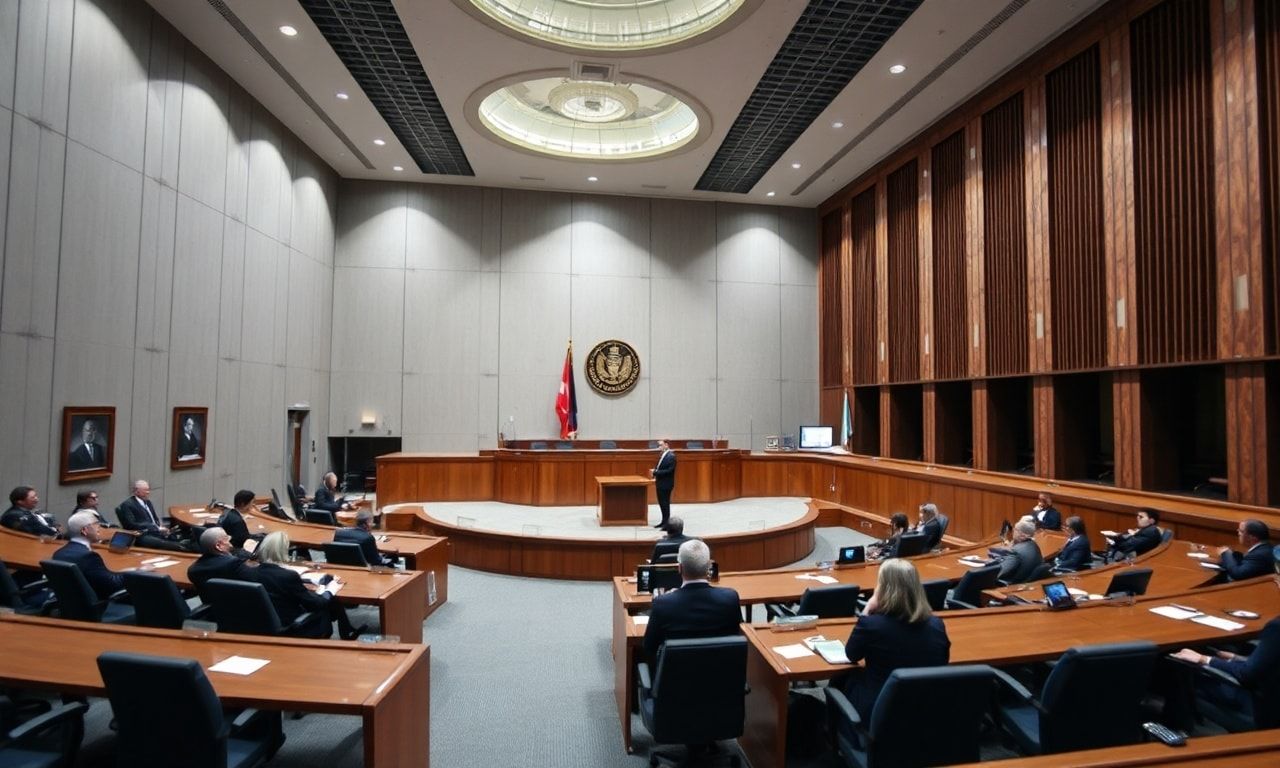
What happens when centuries-old legal procedures meet the fast-paced world of digital innovation? Turkey’s High Court is at that crossroads, undergoing one of the most ambitious technological transformations in its history. Traditionally reliant on towering stacks of paper and manual reviews, the court is now embracing digital tools that promise to increase efficiency, enhance transparency, and reshape how justice is administered. This shift is more than just about convenience—it’s a fundamental change in the legal system’s workflow.
At the heart of this evolution lies the hukukçular için karar sistemi, a platform designed to assist judges and lawyers by streamlining case reviews and decision-making processes. But technology’s role isn’t limited to digitizing files; it’s also about integrating artificial intelligence to support legal judgments, raising questions about the balance between human insight and algorithmic analysis.
This article explores how Turkey’s High Court is adapting to these innovations, the challenges faced by legal professionals, and what the future holds for a judiciary in transition. From the shift away from paper to cutting-edge decision support systems, the court’s journey reflects a broader trend in legal institutions worldwide—finding new ways to uphold justice in a digital era.
From Paper Trails to Digital Files: The Tech Overhaul in Turkey’s Legal System
Turkey’s legal system has undergone a remarkable transformation in recent years, shifting from traditional paper-based processes to digital workflows that promise greater efficiency and transparency. Courts once inundated with physical files and bulky case folders now rely heavily on computerized systems to manage the immense volume of legal documents. This shift addresses long-standing challenges such as delays in case processing, misfiled paperwork, and difficulties in accessing precedent decisions.
- ✅ Digitization reduces physical storage needs and facilitates faster retrieval of case files.
- ⚡ Electronic filing systems enable attorneys and judges to submit and review documents remotely.
- 💡 Digital archives improve long-term preservation and security of sensitive legal records.
One of the standout innovations is the implementation of the akıllı hukuk arama sistemi, an intelligent legal search system designed to help justices and legal professionals quickly locate relevant rulings, statutes, and legal opinions. By harnessing advanced search algorithms, this system cuts through vast quantities of data that would otherwise take hours to sift through manually.
| Criteria | Paper-Based System | Digital System |
|---|---|---|
| Document Access | Slow, manual retrieval required | Instant access via digital interface |
| Search Capability | Limited to physical indexes | Full-text search with filters |
| Storage | Space-consuming, vulnerable to damage | Secure cloud or server-based storage |
Such advancements contribute not only to faster case reviews but also encourage transparency by making legal precedents more accessible. The integration of digital tools is part of a larger modernization effort, aiming to streamline the judiciary’s operations and reduce human error.
💡 Pro Tip: Embracing technology like the yargıtay karar inceleme sistemi helps legal professionals stay current with rulings and ensures thorough case evaluations without the burden of outdated paper trails.
AI on the Bench: How Algorithms Are Shaping Court Decisions
The integration of AI into Turkey’s judiciary marks a significant shift in how court decisions are reviewed and processed. Rather than replacing human judgment, algorithms now assist judges by providing data-driven insights and flagging relevant precedents previously buried in voluminous case files. This symbiotic relationship is especially evident in the yargıtay karar inceleme sistemi, which helps streamline the review of Supreme Court decisions.
- ✅ AI helps prioritize cases based on complexity and urgency.
- ⚡ It reduces the time spent manually searching for similar judgments.
- 💡 Algorithms provide consistency by highlighting legal principles applied in past rulings.
One practical benefit of this technological leap is the system’s ability to convert and integrate diverse document formats efficiently—such as turning a udf dosyasını pdf yapma process into a seamless, automated task. Such capabilities ensure that all submitted evidence and prior rulings can be readily analyzed within the AI framework, combating delays tied to incompatible file formats.
| Feature | Traditional Review | AI-Assisted Review |
|---|---|---|
| Search Speed | Slow, manual | Fast, automated |
| Consistency | Subjective | Standardized patterns |
| Document Handling | Manual conversions | Automated, supports udf dosyasını pdf yapma |
| Decision Support | Human intuition | Algorithmic suggestions |
| Transparency | Depends on judge | Audit trails for AI logic |
While concerns about AI overshadowing judicial discretion persist, the current usage primarily focuses on enhancing efficiency and accuracy. Judges still hold ultimate authority, yet they benefit from a system that quickly maps out relevant case law and potential contradictions. This blend aims to uphold fairness without sacrificing the speed modern courts desperately need.
💡 Pro Tip: Utilizing the yargıtay karar inceleme sistemi effectively entails understanding both its technological limits and legal foundations, ensuring AI serves as a powerful assistant rather than an infallible oracle.
Guardians of Justice: Balancing Tradition and Innovation in Legal Reviews
The Turkish High Court, or Yargıtay, stands at a crossroads of heritage and progress, tasked with upholding justice while adapting to a rapidly evolving digital environment. For decades, legal reviews have relied heavily on human expertise, meticulous documentation, and time-tested procedures. Yet, the surge in technological tools has begun reshaping how cases are reviewed, records managed, and precedents examined. The challenge lies in integrating innovation without compromising the court’s foundational principles.
- ✅ Embrace targeted digitization to enhance efficiency without overhauling traditional workflows.
- ⚡ Leverage AI to assist in document analysis while maintaining human oversight for critical judgments.
- 💡 Foster ongoing training programs to help judges and clerks stay updated on new systems.
- 🔑 Balance transparency with data security in implementing new technologies.
Among the pivotal advancements is the yargıtay karar inceleme sistemi, a sophisticated platform enabling streamlined access to historical rulings and legal precedents. This system embodies the fusion of technology with judicial scrutiny, enabling quicker, more comprehensive reviews. Indeed, Wie moderne Technologien die juristische decision-making process are revolutionizing how courts approach complex cases, offering speed and breadth that were previously unattainable.
| Aspect | Traditional Approach | Modern Technological Tools |
|---|---|---|
| Document Handling | Paper-based files, manual searches | Digital archives, keyword search, AI tagging |
| Precedent Review | Manual cross-referencing, lengthy research | Automated retrieval, pattern analysis |
| Decision Support | Judges’ personal expertise, consultations | Data-driven insights, risk assessment tools |
Still, the introduction of such systems is not without skepticism. Critics voice concerns about overreliance on algorithms potentially diluting judicial discretion or creating blind spots. The judiciary remains committed to a model where technology acts as an aide—not a replacement—for human judgment. This careful balance ensures that justice remains nuanced and contextual, rather than merely data-driven.
💡 Pro Tip: Maintaining transparency in the integration process — involving judges in system design and feedback — strengthens acceptance and ensures the tools meet real judicial needs.
The Human Element: Judges and Lawyers Navigating a Tech-Driven Landscape
The adoption of technological tools in Turkey’s high court system is reshaping the daily work of judges and lawyers, but not without some growing pains. While software improves efficiency, many legal professionals emphasize that human judgment remains irreplaceable. The challenge lies in balancing the use of automated systems with nuanced legal interpretation and the personal scrutiny each case demands.
- ✅ Judges must develop fluency in the new platforms to ensure judicial accuracy.
- ⚡ Lawyers need to adapt case strategies based on insights from tech-driven document reviews.
- 💡 Continuous training on the yargıtay karar inceleme sistemi is essential to keep up with evolving digital procedures.
Indeed, the introduction of advanced search and analytic capabilities means practitioners can handle large volumes of case law with unprecedented speed. Some observers highlight resources like how new technologies enable easier access to judicial decisions as a catalyst for this transformation. Yet, integration is ongoing — the human element, with its discretion and ethical considerations, still anchors the legal process.
| Aspect | Traditional Legal Review | Tech-Enhanced Review |
|---|---|---|
| Time Efficiency | Manual document analysis, slower | Automated sorting, faster retrieval |
| Accuracy | Dependent on human attention | Assisted by algorithms, but requires verification |
| Complex Interpretation | Fully human-driven | Supported tech tools, not replaced |
Many judges report that technology frees them from tedious administrative burdens, allowing more focus on complex legal arguments and case merits. Meanwhile, lawyers can better anticipate rulings by swiftly analyzing precedent patterns, though they must remain vigilant against overreliance on automated suggestions. This evolving relationship between man and machine is still finding its rhythm in Turkey’s judiciary.
💡 Pro Tip: Regular feedback loops between users and developers of the yargıtay karar inceleme sistemi help refine the tools to better fit judicial realities, fostering smoother adoption and more effective outcomes.
What’s Next? Future Challenges and Opportunities for Turkey’s High Court Tech
The integration of technology into Turkey’s High Court has ushered in undeniable efficiencies, but the road ahead is paved with both challenges and opportunities. While digital tools like the yargıtay karar inceleme sistemi have streamlined legal reviews, questions about data privacy, algorithmic bias, and the digital divide remain unresolved. Empowering judges and legal professionals to adapt to rapid technological shifts without compromising the principles of justice presents a continuous balancing act.
- 💡 Continuous training programs to keep pace with tech evolution
- ✅ Developing transparent algorithms free from bias
- ⚡ Enhancing cybersecurity protocols to protect sensitive data
- 📌 Improving accessibility for all court users, digitally and physically
Amid these challenges lies a key opportunity: Turkey’s High Court can serve as a model for judicial modernization worldwide. The fusion of human expertise with sophisticated AI-driven analysis could dramatically reduce backlog and improve consistency in rulings. Experts suggest studying foreign judicial systems grappling with similar transformations, as outlined in the insightful report on how justice is reinventing itself—a recommended read for anyone following this evolution.
| Aspect | Current State | Future Enhancement |
|---|---|---|
| Data Security | Basic encryption, manual audits | Advanced AI monitoring, automated threat detection |
| User Training | Periodic workshops | Ongoing certification and adaptive learning modules |
| Case Processing Speed | Moderate improvement with digitization | Near real-time analysis and decision support |
Ultimately, the future depends on maintaining a transparent interface between technology and human oversight. Increased reliance on algorithms must not overshadow critical legal judgment—after all, technology should assist, not replace, judicial wisdom.
💡 Pro Tip: Stakeholders in judicial tech reform should foster collaborative spaces where judges, technologists, and civil society can openly discuss innovations, pitfalls, and safeguards before widescale deployment.
Where Tradition Meets Tomorrow: Turkey’s Legal Future Unfolds
The ongoing digital transformation within Turkey’s highest court is more than a technological facelift—it’s reshaping how justice is accessed and administered. From replacing cumbersome paper archives with streamlined digital repositories to integrating the yargıtay karar inceleme sistemi, the judiciary increasingly harnesses technology to refine accuracy and speed. Yet, this progress unfolds amid a delicate balancing act: honoring time-tested legal principles while embracing new tools that challenge traditional roles and methods.
Judges and lawyers find themselves at a crossroads—armed with algorithms yet deeply aware that nuances of human judgment remain irreplaceable. The journey ahead involves not only adopting innovations but also ensuring transparency, fairness, and ethical stewardship of emerging systems. As Turkey’s legal apparatus steps boldly into a new era, questions linger about how technology might redefine justice itself.
Will these advancements ultimately deepen public trust, or will they raise fresh debates about accountability and interpretation? What responsibilities come with wielding such powerful tools? As the yargıtay karar inceleme sistemi and other digital platforms evolve, the answers will shape not only Turkey’s courts but potentially offer lessons for judicial systems worldwide. The story of technology and justice is just beginning—how it unfolds depends on those at its helm.
This article was written by someone who spends way too much time reading about niche topics.
To gain a deeper understanding of how recent court rulings are influencing legal practices nationwide, consider reviewing this detailed analysis of key judicial decisions shaping today’s law.